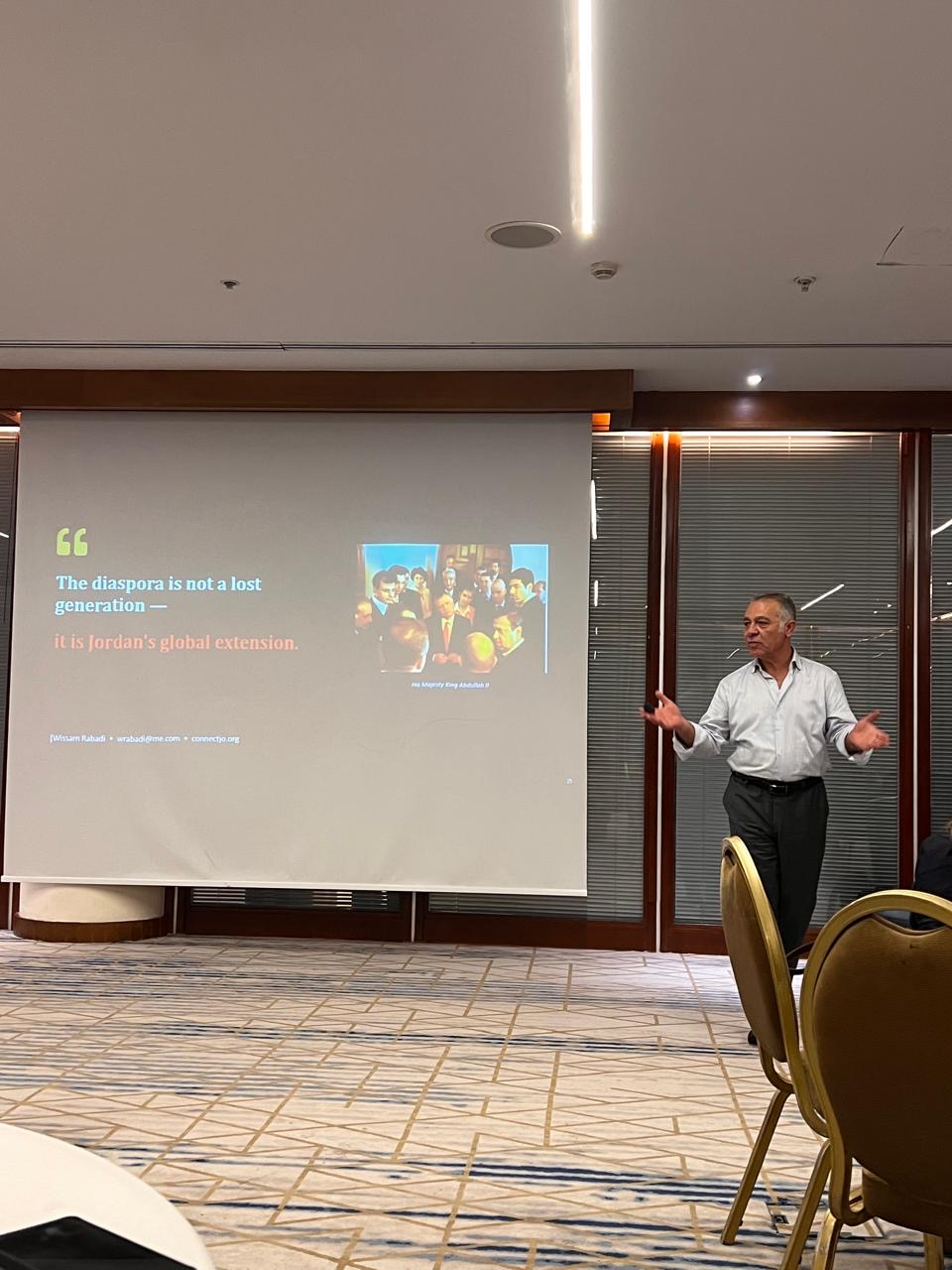
Dr. Al-Rabadi opened with his own story as a member of the Jordanian diaspora, before moving to the facts. Around 800,000 Jordanians live outside the country, roughly 11% of all Jordanian citizens, and about three quarters of them are academically qualified and skilled — doctors, engineers, IT professionals and academics. Two out of every three live in the Gulf, while North America and Europe host many of the entrepreneurs, researchers and corporate executives.
He then turned to remittances, which grew from a few million dollars in the 1960s to about $4.5 billion in 2025. In per-person terms, Jordan ranks second in the world, receiving around $553 per citizen each year. But he was clear that this is only part of the story: money transfers are not knowledge transfers. The bigger prize, he said, is the skills, networks and market access that the diaspora carries with it.
This led to the heart of the talk. Instead of thinking about "brain drain," which makes us mourn, or "brain gain," which makes us wait for people to return, Dr. Al-Rabadi called for "brain circulation" — building bridges so that talent, capital and opportunity move in both directions continuously. Jordanians abroad, he explained, sit inside global corporations, top universities, capital markets and international institutions. Each of them is a potential door for Jordan.
He shared examples of countries that got this right. Indian executives in Silicon Valley helped turn their country into a global IT services hub. Taiwan brought back US-trained engineers and built a semiconductor industry from scratch. Scotland's GlobalScot network connects over 1,000 volunteer executives in 62 countries to Scottish companies, while Pakistan's OPEN community grew from the bottom up with more than 100,000 members and no government funding.
What all of these have in common, he noted, is not goodwill — goodwill exists everywhere, including in Jordan. What they have is infrastructure: institutional backing, a real platform, a clear value for the diaspora itself, and consistent follow-through.
Dr. Al-Rabadi also highlighted Jordanians who have made their mark globally, starting with Dr. Omar Yaghi, born in Amman in 1965 and winner of the 2025 Nobel Prize in Chemistry, along with names such as Amjad Masad, Dr. Issa Batarseh, Dr. Said Al-Hallaj, Zaid Ayoub and Dr. Julia Nesheiwat.
He spoke honestly about the challenges too: Jordan still has no unified, up-to-date database of its diaspora, initiatives often start and then stall, and bureaucracy and trust gaps discourage investors. On the other side, the country has real momentum, from the post-Nobel visibility to Jordan Source and the Economic Modernisation Vision.
He closed by presenting the work he is involved in, including Connect.JO, the non-profit launched in 2014 to activate Jordanian professionals abroad, and a newer effort to build global chapters, networking forums and an annual conference bringing Jordanian executives back to Amman.
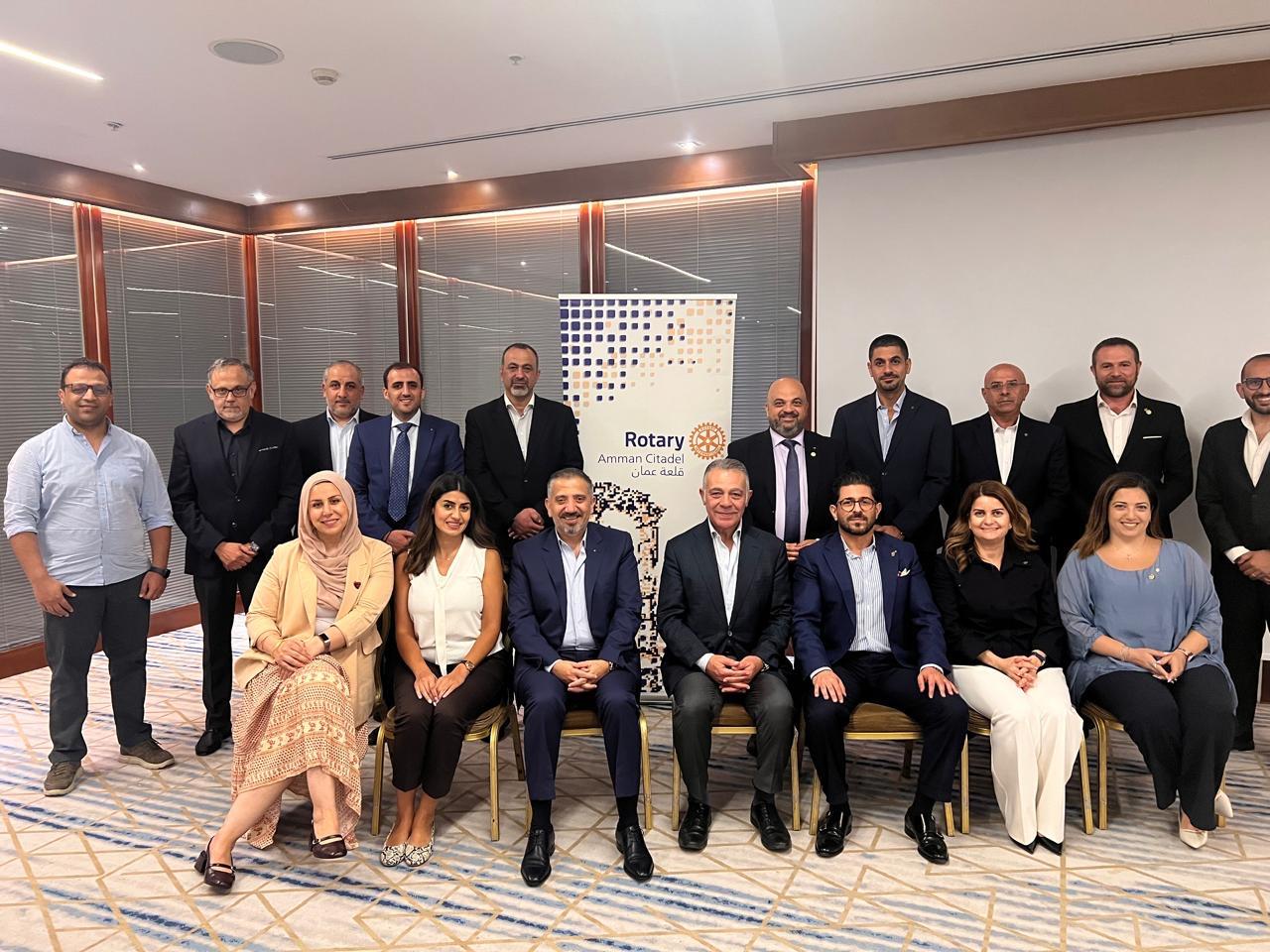
His call to action for Rotarians was practical: connect, champion and host. Every member knows a Jordanian abroad and someone in Jordan who should meet them, and making that introduction costs nothing.